

It’s been a challenging year for spirit producers large and small, as well as for bars and restaurants. There is a sentiment among many in the beverage-alcohol industry that “everything has changed” and that “no one drinks anymore.” You might even hear that no one can figure out what people want to drink.
Drinking habits and trends do indeed shift over the years—but there’s no credible evidence that “everything has changed” about what and how people are drinking. Instead, those changes are gradual, observable, and they’re not quite the mystery that many make them out to be.
Let’s face it: People still want to have fun and relax whenever possible; it helps us all to maintain a healthier mental state. And drinking is still a popular thing to do when relaxing and having fun—whether or not those drinks are alcoholic.
For a deeper understanding of consumer behavior today, in context, here are some insights from bar professionals across North America.
The Classics, but Spicy … and with Agave
“It’s difficult to pinpoint just one dominant trend,” says Evgeny Tolmachev, head bartender at New York City’s Mace—a mainstay among the country’s top-ranked cocktail bars for the past decade.
“On the one hand, there’s still a strong demand for recognizable classics like margaritas or gin-and-tonics,” Tolmachev says. “Still, guests often want a twist—a grapefruit salt rim, powdered chili, or a spiced tincture that adds character and depth to something familiar.”
Other bartenders and bar managers share similar sentiments. For example, the espresso martini is still queen, says Abby Anastasio of Tall Tales Rooftop Bar in Nashville, Tennessee—but it seems like everyone wants it with tequila these days. “So much so,” she says, “that our Summer 2025 menu at Tall Tales [featured] one with Quintaliza Reposado, which is aged in coffee barrels, making it perfect for an espresso martini.”
Bonny Moon Beach Club is on Grand Cayman’s West Bay—a popular vacation destination for Americans. Bar manager Eder Leon says that margarita variations are currently dominating. “Guests are looking for fresh, creative spins on a classic,” he says. “We’ve seen strong interest in spicy versions, like jalapeño- or habanero-infused. On top of that, there’s a growing demand for premium RTDs, especially when they have bar-quality cocktails.”
More broadly, he says, the interest in tequila is growing beyond it. “Agave spirits are experiencing a major evolution—what started as a tequila boom has expanded into a broader appreciation for the entire category of agave and agave-adjacent spirits, including mezcal, raicilla, sotol, and even bacanora. We’re also seeing more agave-based cocktail menus, where classics like margaritas, palomas, and even negronis are reimagined with tequila or mezcal as the base spirit.”
It’s not a phenomenon limited to warmer climes. Even in New York, Tolmachev says, agave is popular among Mace’s patrons. “The continued fascination with agave spirits—particularly mezcal and tequilas with earthy, smoky profiles—remains strong,” he says. “That runs parallel to the long-standing trend for savory cocktails, incorporating food-driven elements and umami components like mushrooms or miso.”
Heidi Finley, lead bartender at Florida’s Ritz-Carlton Sarasota Resort and founder of the My Happy Place bartender pop-up service, is another who sees the ongoing agave ascendance. “Especially mezcal and small-batch tequila,” she says, “which continue to dominate requests, often in more minimalist cocktails where the spirit is the hero. People are also gravitating toward fresh, vibrant, and clean flavors—think citrus-forward, botanical, and herbaceous profiles. Clarified cocktails and culinary-driven ingredients—like miso, seaweed, or olive oil—are also becoming more mainstream in luxury bars.”
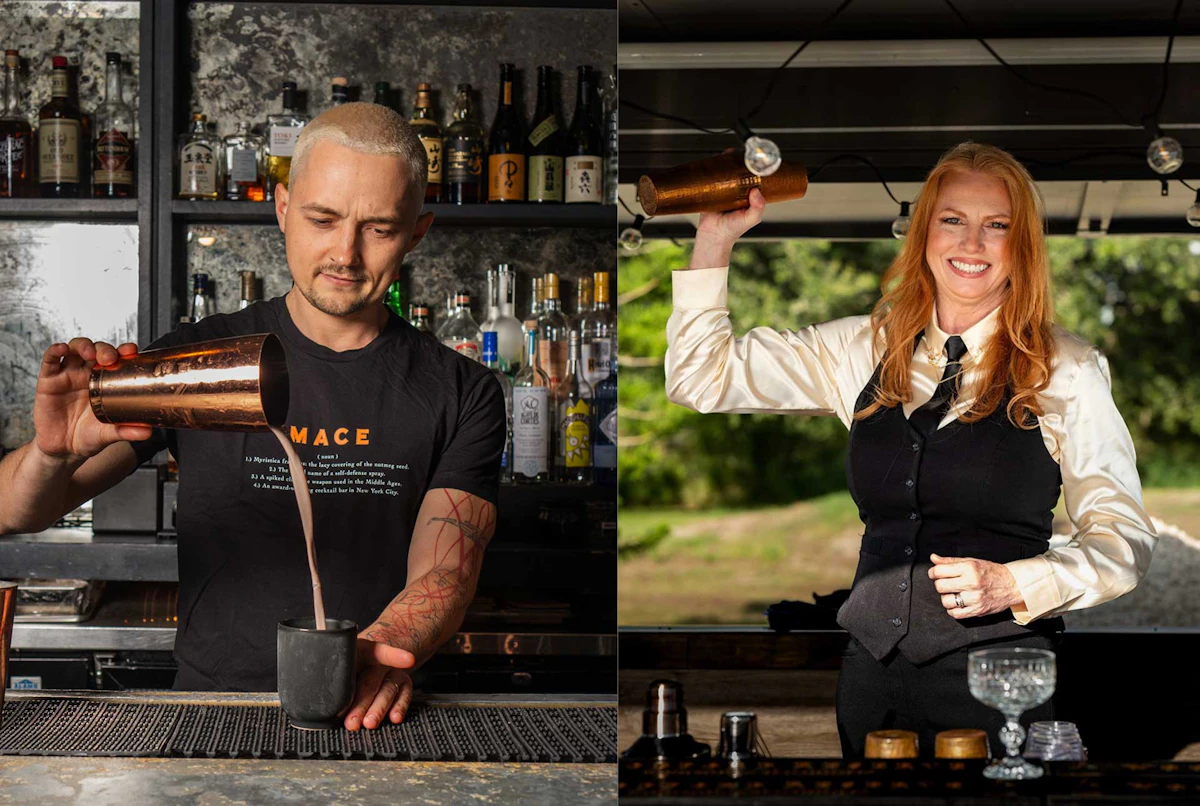
From left: Evgeny Tolmachev (photo: Courtesy Mace), Heidi Finley (photo: Courtesy Ritz-Carlton)
Moderation, but with Style
“We’re seeing guests become more intentional with what—and how much—they’re drinking,” says Leo Robitschek, VP of food and beverage at the Hilton-owned Sydell Group of luxury hotels.
Notably, Robitschek also recently cofounded Second Sip, a lower-ABV gin brand. A big part of why, he says, is “to give people a way to participate fully in the ritual of drinking without having to question if they can have another.” There appears to be more demand for such options.
“There’s a growing curiosity around lower-ABV options, and people are more willing to explore new spirits and techniques if they’re framed within a familiar experience,” Robitschek says. “Martinis are still having their moment, but there’s also a resurgence in bright, bitter, apéritif-style drinks. Guests want the perfect balance of familiarity, nostalgia, and creativity—something that feels familiar but only a great technician can make.”
Among the bar professionals surveyed, almost all say they’re seeing that rise in “intentional” drinking and interest in low- and no-ABV cocktails.
“There’s been a noticeable increase in requests for nonalcoholic options,” says Marshall Minaya, beverage director at Valerie in New York City. Even in areas of the country that are heavily frequented by vacationers, low- and no-ABV and intentional drinking continue to be a factor.
In Florida, Finley says she’s also seen a “clear lean toward intentional drinking” in parallel with curiosity about what goes into the drink. “Guests are asking more questions about ingredients, origins, and ABV,” she says, “and they’re choosing quality over quantity.”
Anastasio in Nashville is among those celebrating this industry-wide shift and the wider array of NA options.
“As a person in recovery, it brings me immense joy to see sober people being included in the conversation,” she says. “The NA market has been growing like crazy for years now, and NA bottle shops are popping up all over the country, but the variety and innovation I’m seeing on NA menus is incredible. No longer do we have to sip soda water or O’Doul’s with our meals—mocktails are becoming just as interesting as their alcoholic counterparts.”
At the annual Bar Convent Brooklyn trade show, the 2025 edition featured several panels discussing the rise of low- and no-alcohol spirits and cocktails, besides exhibitors sharing a variety of NA and low-ABV products. The emerging consensus appears to be that consumers are actively seeking NA cocktails that don’t feel like a compromise—those that are still flavorful, low in sugar, and align with the changing societal norms.
Nashville’s Tall Tales has a short menu of zero-proof cocktails called “Designated Drivers.” They include one called Serene Spritz, featuring elderflower, peach, lime, mint, and soda.
“It’s essentially a nonalcoholic Hugo spritz with mint and seasonal fruit,” Anastasio says, “and it’s my first menu contribution to be a certified hit with guests, which always feels great.”
Sustainable, Honest, Camera-Ready
There also appears to be growing interest in sustainability and transparency. The origins of spirits and ingredients and the people behind them are increasingly important to imbibers, the bar managers say.
“Guests light up when they find out that something is made in-house—like a coconut syrup we make from fresh Thai coconuts,” Tolmachev says. “Whether it’s a syrup, tincture, or a house-made infusion, people are drawn to the craftsmanship and authenticity behind the bar.”
Ben Yabrow, head bartender at New York’s Sip & Guzzle—recently named best new cocktail bar in the United States in the Spirited Awards—says he also sees a shift back toward simpler preparations.
“Guests seem more interested in clean, straightforward drinks that are well executed rather than overly elaborate or gimmicky,” Yabrow says. “Minimalism is a significant aspect of this. Many of the top bars I visited in London, Paris, and Madrid didn’t use garnishes at all—or, if they did, it was something very small and intentional, often meant to be consumed. Clarified cocktails are also becoming more prevalent. They’re elegant, easy to drink, and align with this broader move toward refinement without excess.”
While many drinkers still want cocktails that are attractive and “Instagram-ready,” clean lines are increasingly in fashion—and flavor still matters.
Ross Simon, owner of Phoenix’s Bitter & Twisted and Little Rituals—the latter another Spirited winner, recently named best hotel bar in the country—cautions that creating cocktails just for flair or attractiveness rarely leads to a tasty drink that guests want to reorder. Instead, he says, building cocktails that hit the mark in terms of flavor should always be the priority. “If a cocktail is just visually stunning and generates buzz online, the reality is that they often fall short on taste, flavor, and balance,” he says.
Fussy, overwrought cocktails can also bog down service and befuddle customers, says Leon of the Grand Cayman’s Bonny Moon. “Overcomplicated cocktails with too many ingredients that bury the spirit and confuse the guest are an issue,” he says. “I’m all for creativity, but if it takes more time to explain than to enjoy, it’s probably not right for a busy bar.”
Speaking of the need for speed, some of the most dynamic shifts are happening behind the scenes—in how drinks are prepped, not just served, Tolmachev says.
“Many bars are embracing enzyme-assisted extraction and other lab-inspired techniques to improve flavor yield and reduce waste,” he says. “There’s also a continuing emphasis on speed and precision—through pre-batched, diluted, and chilled cocktails that can be served instantly while still offering the quality and nuance of freshly made drinks.”
Sarasota’s Finley says she’s also seeing a move toward more fresh, pre-batched cocktails as well as “bespoke ice programs.” There’s also been a strong push toward sustainability and “hyper-local” sourcing, she says, especially when it comes to seasonal menus.
“More bars are foraging or partnering with urban farms and local makers—honey, herbs, and even mushroom distillates are making appearances,” she says. “Also, bar professionals are pushing boundaries with multisensory experiences—smoke, sound, texture, temperature contrast, and even storytelling elements are being built into the cocktail ritual.”
Yabrow also mentions the news about Paris bar De Vie, whose owners have opted to run it entirely without the use of ice because they view it as wasteful. (Paris bars also generally lack ice machines, depending instead on ice deliveries via truck.) Instead of ice, De Vie’s team is pre-diluting drinks and keeping them at serving temperature.
More broadly, an increasing number of bars have ditched their ice machines and are using hand-cut ice, resulting in less waste after each shift.
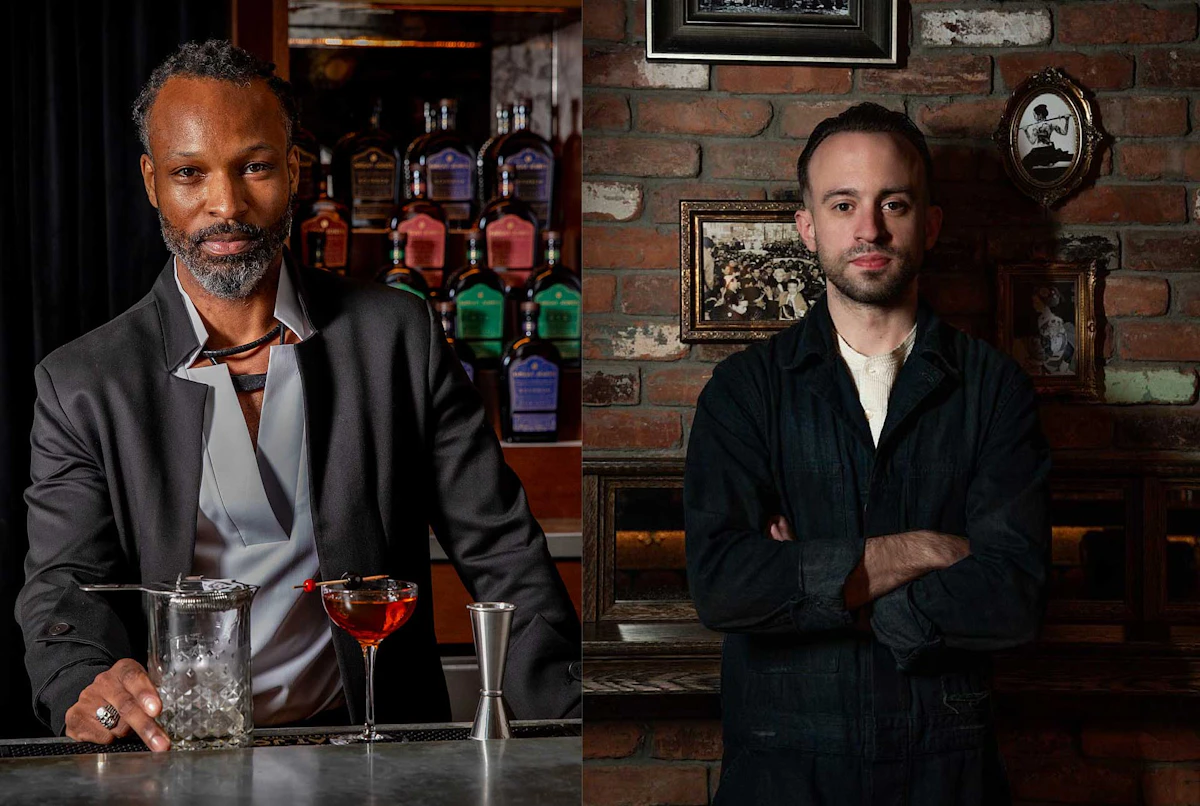
From left: Collin Frazier (photo: Will Engleman), Ben Yabrow (photo: Courtesy Sip & Guzzle)
Better Value, Memorable Experiences
Generally, the cost of going out has been rising faster than people’s incomes. Understanding how economics are driving patrons’ habits right now has become crucial to bars and the wider hospitality industry.
Most bar professionals say they’ve noticed more guests opting for value while trying not to compromise on quality.
“There’s more interest in shareable cocktails or pitchers,” Leon says, “especially during group outings or brunches—hence, our sangria pitcher is a popular option for regular guests.”
Gen Z drinkers appear to be more intentional about their drinking and spending habits. Statistics suggest that they go out but perhaps less often than previous generations did. Besides drinking less alcohol overall, younger patrons are choosing quality over quantity, and they’re more selective about their establishments and experiences. Many in the industry are seeing guests of all ages being choosier about where they go, what they drink, and how much they drink.
“There’s less tolerance for mediocrity,” Robitschek says. “If a guest is going to spend $20 on a cocktail, they want it to be memorable. That’s pushed us to be sharper, more thoughtful, and more consistent.”
Besides lower-ABV options, he says, there’s more demand for lighter drinks that extend the evening. “We’re also seeing more interest in sessionable cocktails and drinks they can have more than one of without the guilt—whether that’s from a wellness angle, a lifestyle shift, or a desire to stretch the experience further.”
There is a lot to unpack when trying to understand how economics and broader cultural trends affect consumer habits. There’s a widespread feeling that people are staying home to enjoy their technologies while feeling increasingly isolated. In that vein, a session at this year’s Bar Convent Brooklyn was titled, “The Last Great Third Space: Why We Must Protect Our Bars.” Panelists there discussed how to better foster a sense of community and create a more welcoming environment in bars, as well as how to offer the kinds of experiences that can help persuade people to go out.
Stories Still Matter
Even in a crowded space, the stories behind cocktails, brands, ingredients, and the people who make and serve drinks remain essential to consumers. Sharing stories is a great way to foster connection, and bar patrons value expert information.
Bartender recommendations are becoming increasingly popular, and that creates a more interactive experience. Customers are eager to chat with an expert and hear the story behind the drink, rather than have a bartender simply slide a menu across the bar or point at a QR code.
Distillery bars are in a great position to excel at this—in the place where the spirits are made, guests tend to arrive pre-loaded with an expectation to learn more.
“Guests are always looking for something new and interesting,” says Collin Frazier, beverage manager and head mixologist at New York City’s Great Jones, Manhattan’s first legal whiskey distillery since Prohibition. “I’ve found that our guests are hungry for compelling cocktails that have a story, be it in the concept of the drink itself or in the ideation of the spirit therein.”
Not so much a recent trend as much as timeless advice, many of these bar professionals emphasize the need to listen to the customer: Ask them what they drink at home, whether they frequently visit bars, and why they prefer their favorite places.
Cocktail culture is constantly evolving, and today’s consumers are bringing a desire for thoughtful choices to the human need to socialize. From agave spirits to lower-alcohol options, the industry is embracing intentionality as well as creativity, enhancing the drinking experience while—we can all hope—fostering greater connections among friends, family, and community.
Whether it’s a classic cocktail or an innovative concoction, the appreciation of shared moments over drinks remains one of life’s simple pleasures. That doesn’t change.