

When you hear piña colada, you might picture Isaac Washington from The Love Boat serving his seafaring guests a tropical frozen drink—or, if that reference is too dated, maybe you recall the frozen drinks from the hit show The Bear, or how Sofia Vergara’s character in Modern Family often made or ordered frozen daiquiris and piña coladas to unwind.
The fact is, the piña colada still holds a significant place in cocktail culture. That catchy Rupert Holmes song from the ’70s brings it to mind for many, and that’s often what pops into people’s heads when they think of tropical drinks. But there’s so much more to discover with this cocktail beyond the popular frozen blend.
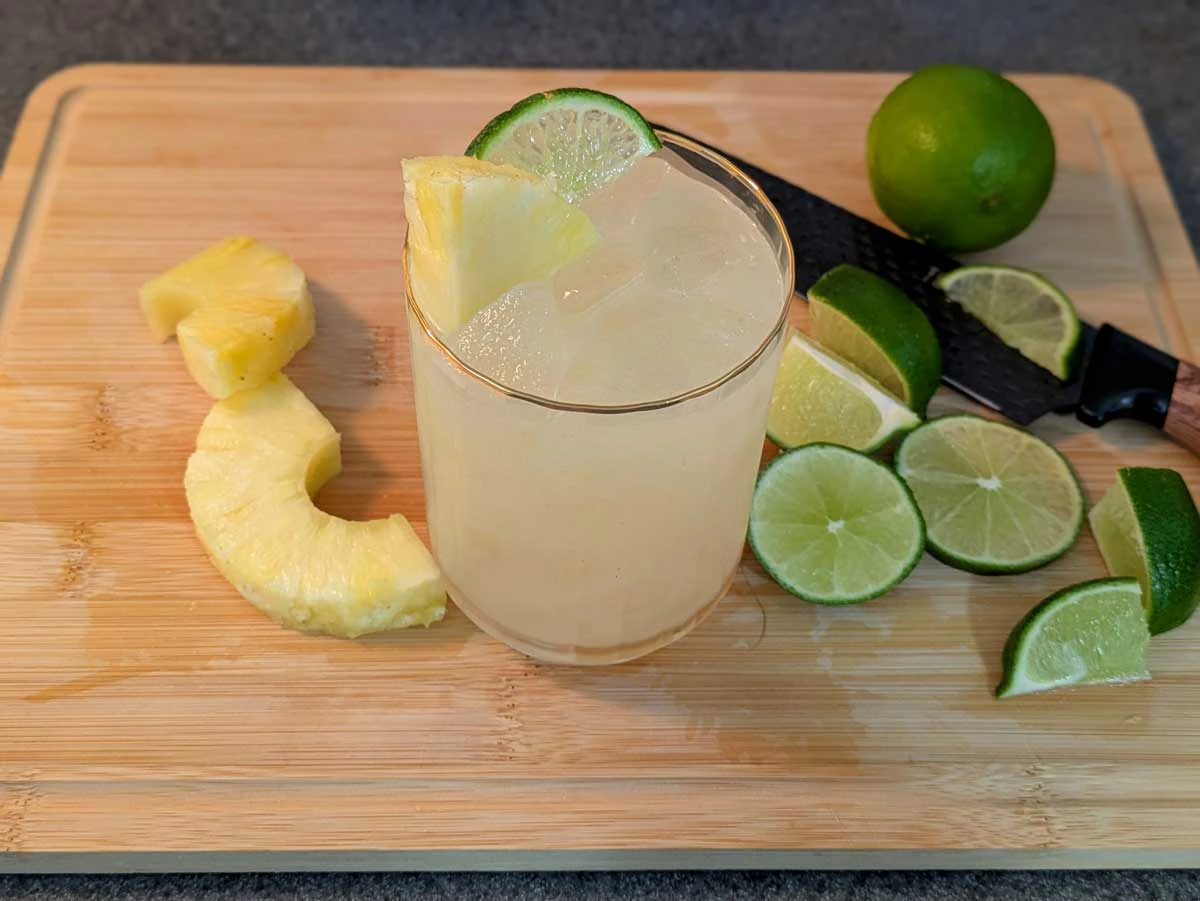
The Cuban
Recently, while diving into the world of sour cocktails, I found myself increasingly obsessing over the daiquiri and thinking more about tropical cocktails—especially after hitting up a drive-thru daiquiri spot in New Orleans.
The more I chatted with rum makers and cocktail enthusiasts, the more I couldn’t shake thoughts of the piña colada. This is a cocktail that evokes strong feelings. Some people adore it while others aren’t fans, especially once you go beyond the classic Cuban piña colada—and that’s where I really found the magic.
Literally, piña colada is Spanish for strained pineapple, and it’s likely that the cocktail began as a pineapple daiquiri. References to shaken pineapple daiquiris date back to the 1920s, and it’s widely thought that Puerto Rican bartenders added coconut to the mix sometime in the 1950s. I won’t go into this drink’s history here, but it’s fraught with arguments and differing opinions.
Jessie Marrero, beverage manager at Vesper in Ellicott City, Maryland, and a mixology instructor, highlights the daiquiri link:
“The correlation between the two drinks is fascinating, as the Cuban piña colada is a direct evolutionary riff on the daiquiri,” she says. “They both share the same sour template: white rum, citrus and sugar, with the Cuban piña integrating pineapple as the main fruit modifier.”
She add that the daiquiri stands the test of time because its simple recipe is easy to replicate, and bartenders can modify it to fit different tastes, regions, or bars.
When made without a blender, a piña colada offers a daiquiri-like sense of satisfaction—a simple recipe and a culmination of perfectly married flavors. Here’s a recipe for the Cuban classic.
Cuban Piña Colada
2 oz white rum
3 oz pineapple juice
¼ oz fresh lime juice
½ oz simple syrup
Shake all the ingredients with cubed ice and strain into a rocks glass over fresh ice. For a little flair, garnish with a lime wedge or a pineapple leaf.
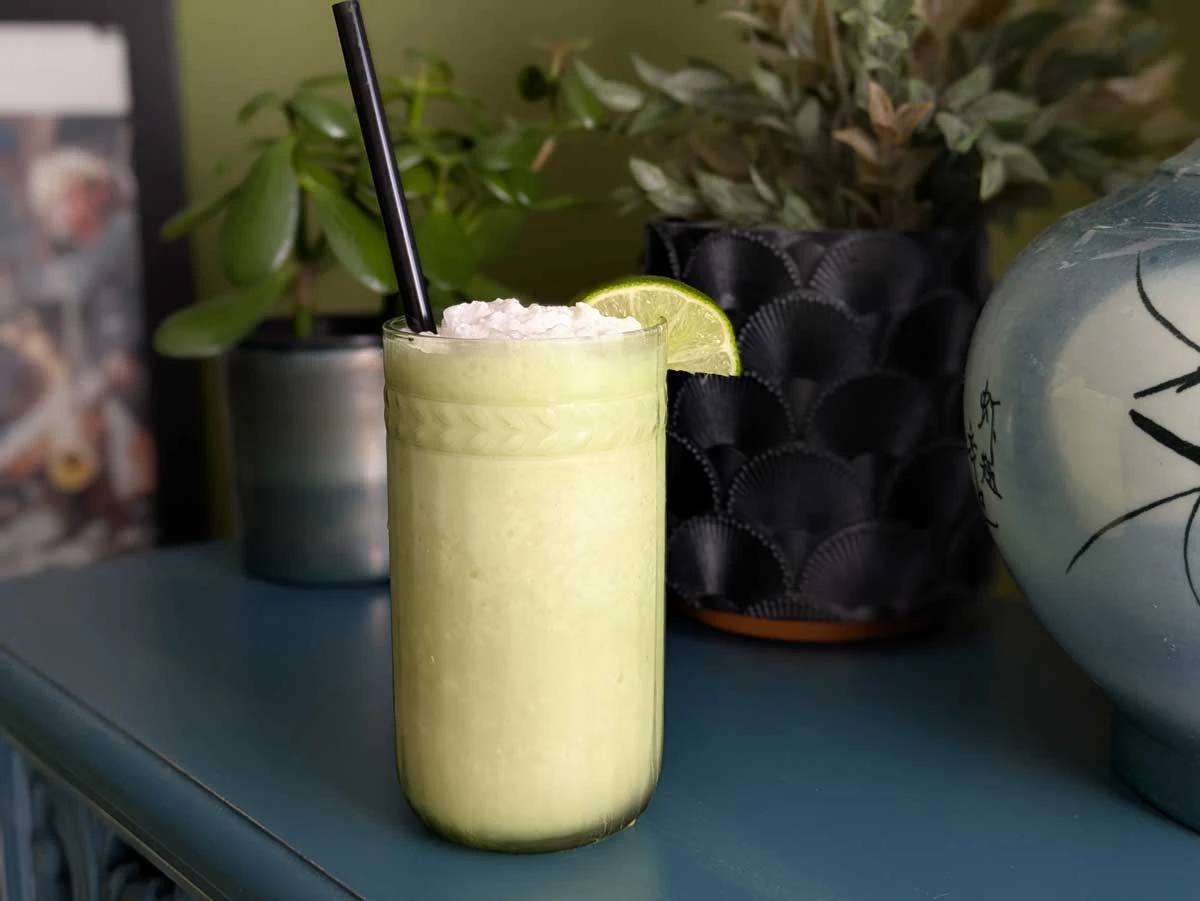
The Puerto Rican
When it comes to the Puerto Rican version, Marrero admits that she may have a bias.
“As a Puerto Rican, I’m going to just say that of course the piña colada is still on menus today because it’s one of the most delicious drinks ever created,” she says. “But beyond that, I think there are several reasons. For one, it’s an escape drink—meaning when it comes to mind, so does vacation and relaxation. It has the ability to transport you and alter your state of mind.
“Second, it’s a cocktail that doesn’t taste like one—it’s cold, creamy, fruity, and decadent in the best way. It’s a silly [drink], in the best way possible. … And last, it can be made without alcohol and still achieve the same effects.”
Puerto Rican Piña Colada
2 oz light rum
1½ oz coconut cream
1½ oz pineapple juice
½ oz lime juice
You can choose to shake or blend this cocktail based on your mood or the season. Just mix all the ingredients in a cocktail shaker with ice, shake well until the shaker tin is cold, and strain over fresh pebbled ice. For the frozen version, toss in four to six ice cubes and blend away. For garnishes, you can go with a pineapple wedge, a pineapple leaf, a fun cocktail cherry—or, hey, why not use all three?
The Tropical Elements
Let’s consider the components that make these drinks so popular.
Boston bartender and author Frederic Yarm says the Cuban piña colada expands on the daiquiri’s holy trinity—rum, lime juice, and sugar—with the acidic complexity of pineapple juice.
“The addition of pineapple also elongates the drink and lowers the proof, to make the Cuban piña colada a bit more refreshing and more of a cooler than a lime-driven sour,” Yarm says. “In between the two is the pineapple daiquiri, made with a smaller amount of pineapple juice—so the concept can be viewed as flexible and almost on a continuum between bracing and thirst-quenching.”
When I ask Yarm why the daiquiri endures, he points to its simplicity and the drink’s way of “expressing itself with constraints.”
“There are so many styles of rum, ranging from clean to funky or grassy, unaged to aged, and clear to wood-extracted amber to dark, and the drink maker can even blend more than one of these styles to conjure up a desired base,” he says. “Moreover, the sweetener can vary from clean white sugar to rich, dark demerara sugar. Accents like bitters, flavored syrups, and small additions of liqueurs can also shape the drink and complement the rums, giving the drink new life. Indeed, there is a style … to match every mood, from relaxed to contemplative to celebratory.”
Yarm says the Cuban piña colada has become less popular than either the Puerto Rican version or the pineapple daiquiri. “The Puerto Rican piña colada can do a great job of masking most of the heat from the rum’s alcohol and make the mixture go down as easy as an Orange Julius at the mall,” he says, “so it will always be popular with folks with more simple-to-please palates or folks in relaxing environments.”
Gabe Urrutia, author of Miami Cocktails and an adjunct professor of hospitality at Florida International University, says the daiquiri is his “go-to cocktail.”
“In its simplicity, it allows the rum to shine,” he says. “When that drink is properly shaken, and it’s 85°F[30°C], and it’s 70 percent humidity, it is the most refreshing cocktail. And let’s be real: What grows together goes together. Sugar, lime, and a great rum thrive in a subtropical climate like Cuba.”
However, he also loves the Puerto Rican piña colada. “The fat from the coconut cream, the acid and sweetness from fresh pineapple come together to create an exceptional tropical cocktail,” Urrutia says. “Tie this in with some incredible rums, and you’re in for a real treat.”
It’s also a Caribbean connection—a tale of two islands.
“It’s such a beautiful relationship, one cocktail from Puerto Rico and the other from Cuba,” Urrutia says. “You find ingredients suitable to make an extraordinary rum cocktail, and you end up with two timeless classics made in the Caribbean. Both find sweetness in different ways, find tartness in different ways, but at the end, you end up with two truly unique cocktails that can be enjoyed on different occasions—and of course, the journey into rum, and how different styles play into creating a truly unique take on a daiquiri or piña colada.”
Easy Pleasure
Beth Dixon shamelessly loves a good piña colada.
“I am a sucker for tropical flavors and especially coconut,” says Dixon, who offers cocktail consultation and education through her Salt and Acid firm, based in Richmond, Virginia. “There’s also something nostalgic about having a virgin piña colada as a kid. It’s kind of your first cocktail experience—a gateway, if you will.”
Maybe some aficionados look down their noses at the piña colada, compared to the daiquiri. Not Dixon.
“I think folks sometimes need to get out of their heads and stop overthinking cocktails,” she says. “We get too snooty and serious sometimes in this industry. It’s okay to have fun. There’s a time and a place for a piña colada—and when you’re there, nothing can beat it.”
Here are two of her favorite riffs: the Miami Vice (pictured at top) and the Piña Verde.
“When I make piña coladas,” Dixon says, “I always add a little bit of lime to balance the sweetness, and a healthy dose of Angostura aromatic bitters on top, for funsies.”
Miami Vice
This is a layered cocktail, so follow the steps as laid out to make it a success, no matter your level of mixology magic.
2 oz rum, divided
2 cups crushed ice, divided
1 cup chopped strawberries
1 oz fresh lime juice
½ oz simple syrup
2 oz coconut cream
2 oz pineapple juice
1 pineapple slice for garnish
To a blender cup, add 1 oz rum, 1 cup ice, strawberries, lime juice, and simple syrup; blend until smooth. Pour into a hurricane glass or pint glass and place in the freezer while you build the rest of the cocktail.
Rinse out the blender. Add the remaining ingredients to the blender cup, including the remaining 1 oz rum and 1 cup crushed ice, and blend until smooth. Remove the glass from the freezer and pour this half of the cocktail on top for a layered effect. Garnish with a pineapple slice, grab a straw, and enjoy.
Piña Verde
Years ago, famed bartender Erick Castro of Polite Provisions added an unusual ingredient to his piña colada—green Chartreuse—and it has inspired countless variations since.
Looking to add an herbaceous profile to the tropical flavors, Castro floated green Chartreuse on top. Eventually, he saw how well the flavors worked together, ditched the rum altogether, and made green Chartreuse the star of the show. Until you’ve tried it, don’t knock it.
1½ oz green Chartreuse
1½ oz pineapple juice
¾ oz coconut cream
½ oz fresh lime juice
Mint sprig for garnish
Combine all the ingredients in a cocktail shaker with cubed ice and shake until well chilled. Strain over fresh pebbled ice in a rocks glass and garnish with a mint sprig.
Alternatively, you can easily craft a blended variation: Add all ingredients to a blender with four to six regular ice cubes and blend until smooth.
Blended Cultures
One of the things I love most about the piña colada is how easy it is to riff on it—Castro’s version is a perfect example. I’ve had a handful that are forever etched in my cocktail memory, both stateside and in Puerto Rico.
Maggie Campbell, CEO of the U.S. rum company American Cane, shares a couple of her favorite variations—and a big part of it is how they feel in the mouth.
“Austin Hartman, owner of the Paradise Lounge in NYC, made one that instantly transported me back to a patio table in the backyard of some of my Don Q rum family,” Campbell says. “La Factoria in Viejo San Juan, Puerto Rico, does a shaken version in a Collins glass—perfect for late night as opposed to sitting on a sunny beach, where the blender style is more dilute and sessionable. For me, it is all about the comfort of the creamy richness, palate-cleansing acidity and brightness, and texture, texture, texture. I want the froth to make me feel like I’m sipping the clouds of Jupiter—foamy and rich but airy and wispy.”
Ultimately, a great piña colada has the power to transport you and stick in your memory. And there are countless ways to mix it up, so take a chance on the next piña colada riff you find—it might just blow your mind.
For example: Many years ago, I tasted a southeast Asia–inspired piña colada that blew my mind. No matter how many times I asked, I was told the recipe was a trade secret, so I’ve spent years trying to re-create the cocktail with a little help from industry friends. I think I finally arrived at a place that is close enough—with a little of my own flair, and some borrowed.
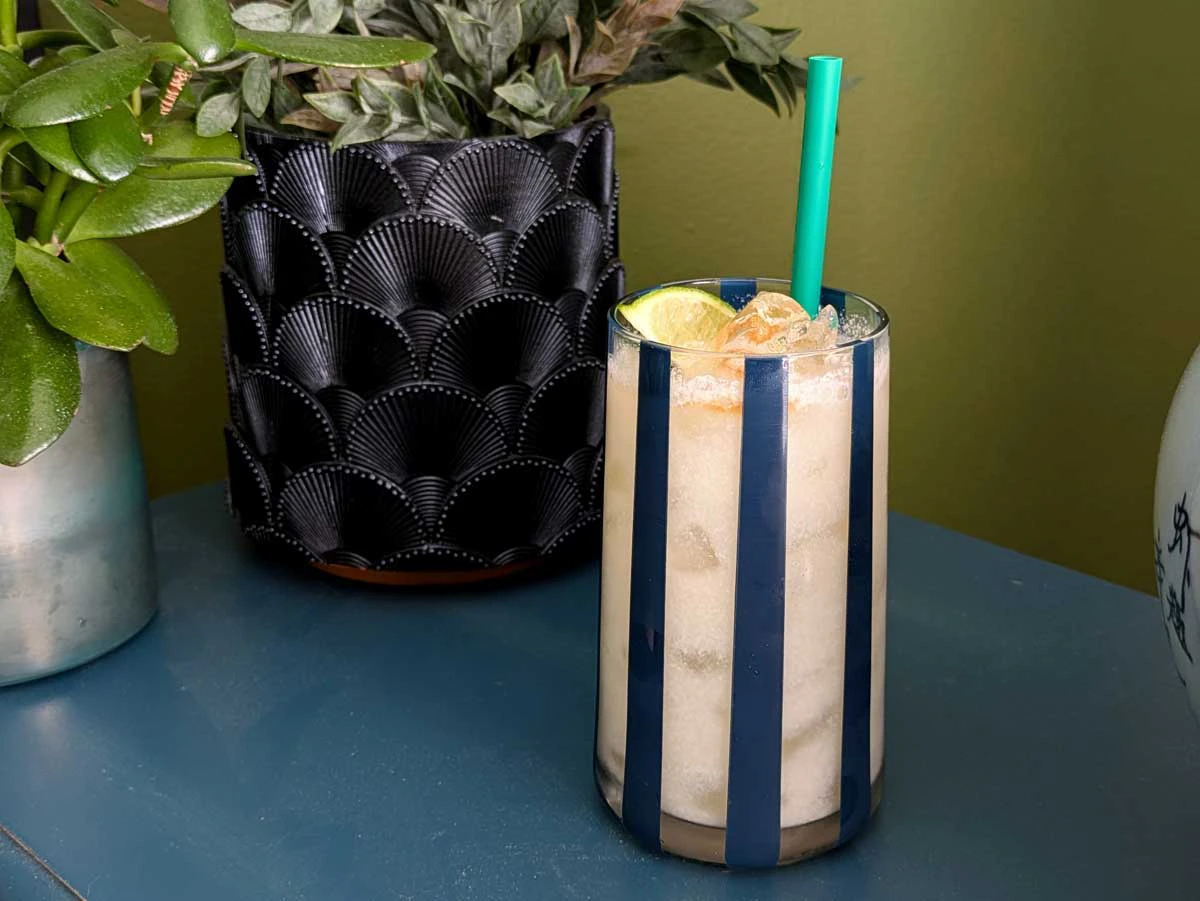
Mysterious Colada
1 oz white rum
½ oz aged rum
1 oz coconut cream
1 oz coconut milk
½ oz fresh lime juice
½ oz pineapple juice
1 tsp of lemon grass paste
1 dash aromatic bitters
1 lime wedge
Add all the ingredients to a cocktail shaker with cracked ice and shake well. Strain over fresh ice in a tall glass and top with one dash of bitters and a lime wedge.