

There’s a buzz in the air: The classic martini is getting a savory makeover. Brine, herbs, and umami are taking center stage, transforming the martini from its traditional roots into a bold new trend poised to define the cocktail scene this year.
Gone are the days when a martini was simply gin or vodka, a whisper of dry vermouth, and an olive or lemon twist.
Today, cocktail lovers are seeking more adventurous flavors and experiences that draw them out to bars, where martinis push the boundaries of tradition. Tomato water, miso, smoked salt, and house-stuffed olives are among the unique ingredients redefining the martini. The savory martini isn’t just a drink — it’s a culinary experience in a glass.
From coast to coast and far abroad, the consensus among bar professionals is clear: People are craving complexity. In the Midwest, a colleague shares that their best-selling martini is a creative Gibson with a house-pickled shallot and mushroom brine. On the East Coast, dirty-martini menus feature options such as truffle oil and kimchi brine. Even in smaller markets, savory martinis with ingredients such as celery bitters are gaining popularity.
Sapore di Sale
Let’s first dive into olive brine. The art of brine isn’t just a technicality, it’s a passion—the secret handshake among those who truly appreciate the savory martini.
When I was behind the stick, as we say, I obsessed over my own signature blend. Castelvetrano olives, with their meaty texture and rich, buttery flavor, always won out over the standard pimento-stuffed variety. Their brine was liquid gold—earthy, nuanced, deeply savory—so I made sure to keep a steady supply on hand, often snagging extra from the kitchen’s appetizer prep.
But the real magic came from crafting my own saline solution, a favorite trick among bartenders in the know. By dialing in just the right balance of salt and water, I could amplify salinity and complexity without flooding the martini or washing out the spirit’s character. There’s an artistry to it—coaxing out bold flavors while keeping the drink elegant and refined.
When you nail that balance, you’re not just serving a cocktail—you’re offering a revelation in a chilled glass.
Make Your Own Saline
You’ll need kosher salt—avoid iodized table salt. You’ll also need distilled water and a glass bottle with a dropper.
Measure about 20 ml of kosher salt, then add 80 ml of warm, distilled water until the salt dissolves completely.
To add a salty profile to a martini that lacks olive brine, add two or three drops of saline before stirring. You’ll have all the benefits of the salt without the brine’s extra liquid volume—and, if olives aren’t your thing, you’ve circumvented that flavor altogether.
Salty Soul
3 oz dill-infused vodka
1 oz dry vermouth
3 drops of saline
Add all the ingredients to a mixing glass with cubed ice and stir well. Strain into a martini glass and garnish with fresh dill and/or a single olive.
Miso Super
Miso is another ingredient making waves in the world of savory martinis, and for good reason: This Japanese fermented soybean paste delivers a remarkable depth of flavor—salty, earthy, and rich with umami—that melds seamlessly into a well-made martini.
For the best technique, start by adding a small spoonful of miso paste directly to the base spirit in a mixing glass. Whisk vigorously or stir with a bar spoon until the paste is completely dissolved and no lumps remain. For a smoother texture, you can also infuse miso in the spirit ahead of time—simply combine the paste and spirit in a jar, let it infuse for several hours, then strain out any solids.
Whether whisked or infused, miso brings an almost creamy mouthfeel and a wonderfully lingering finish. Miso’s complexity highlights the herbal nuances of gin and provides an unexpected backbone to vodka, making each sip feel layered and intriguing. Its savory-salty character satisfies those looking for something beyond sweet or citrusy cocktails. Remember, the key is balance: We want to enhance the martini without overpowering it and to let miso invite guests to explore new savory territory.
An internet search will turn up an abundance of recipes featuring miso, including espresso martinis (a fun twist), miso-washed vodka, miso old fashioneds, and so on. There are even miso vermouth products on the market.
By all means, go nuts and experiment. Miso seems subtle at first, but it’s more assertive than it appears. When testing new recipes, start with a small amount—add a little miso paste, whisk or stir well to fully dissolve, then taste and adjust as needed. If you like a hint of sourness, try adding a splash of vinegar to your martini with miso for a wonderful umami experience. Umami is considered the fifth basic taste along with sweet, salty, sour, and bitter. I am perpetually seeking to achieve the perfect umami bomb.

Chuck Berry Miso
3 oz vodka
½ oz dry vermouth
½ tsp miso paste
½ oz caperberry brine
Shake all ingredients with ice and double strain into a martini glass. Garnish with a caperberry and (optionally) nori.
No Big Dill
Let’s talk about pickles—a surprisingly essential player in the savory martini renaissance.
The humble pickle, in all its tangy glory, brings a spectrum of flavors and textures that can transform a standard martini into something utterly unforgettable. Pickle brine is a secret weapon behind the bar, introducing not just salt and acidity but a lively, mouthwatering zing that enlivens the palate.
A splash of brine, a spear of dill, or even a pickle-infused vermouth can turn the expected on its head. The sharp tang of vinegar, the subtle sweetness of pickled vegetables, and the herbal undertones from spices such as dill, garlic, and mustard seed all work together to create a drink that’s as complex as it is refreshing.
Yet the world of pickled garnishes doesn’t stop at cucumbers. Bartenders are experimenting with everything from pickled green beans and carrots to spicy okra and jalapeños, layering in unique textures and bursts of flavor. Each pickle variety brings its own character—a garlic dill adds bold, savory notes, while a spicy pickle infuses a fiery kick that lingers long after the last sip.
The artistry comes in pairing the right pickle with the right spirit—a bold, botanical gin sings with the brightness of a vinegar-forward pickle, while a milder vodka might benefit from the subtle heat of a peppery brine. The next great martini could be just a pickle-briny splash away.
Dean Martini
The rule is almost always to stir a martini rather than shake, but when incorporating brine, oil, or citrus, shaking the cocktail can provide better integration.
2½ oz juniper-forward botanical gin
½ oz ramp-infused dry vermouth (see below)
½ oz dill-pickle brine
Add all ingredients to a cocktail shaker with a handful of cubed ice and shake well. Double strain into a martini glass and garnish with a dill-pickle spear.
To infuse the vermouth, combine 2–4 ramp bulbs and leaves (depending on how potent you want the ramp flavor to be) with 750 ml dry vermouth in a sealed jar. Refrigerate 5–7 days, then strain. Substitute leeks or green onions for the ramps, if necessary, because fresh ramps have a very short season.
Rosemary-Infused Clooney
Another fantastic pickle martini uses both olive and pickle brine, along with rosemary, to add earthy, verdant flavors to vodka. Mixing olives and pickles creates flavor complexity that keeps you coming back for more.
3 oz vodka
½ oz rosemary-infused dry vermouth
½ oz 50/50 blend of sour pickle juice and olive brine
Shake all ingredients with ice and double strain into a martini glass. Garnish with pickle, olive, and a fresh rosemary sprig.
To infuse the vermouth: Warm 6–8 rosemary sprigs in a pan for 2–3 minutes before adding to 750 ml of dry vermouth, in the bottle or a sealed jar. Store in the fridge for 5–7 days.
Oil & Water, They Mix
Adding fat to martinis is also gaining traction, opening up a whole new world of flavor and mouthfeel. Olive oil, cheese brine (think feta), and even tinned anchovy oil are quickly finding their way onto ingredient lists.
The magic of fat-washed cocktails lies in their ability to add a silky, luxurious texture to the drink, rounding out briny or herbal notes with a velvety smoothness that coats the palate. Feta brine, for instance, brings a subtle, tangy salinity that whispers of the Mediterranean—salty, yet delicate and uplifting. It transforms the martini into something with a lingering, savory complexity that invites another sip.
Olive oil–infused vodka is another revelation: A few drops lend not only depth and richness, but also a beautiful sheen and a gentle, lingering finish. And, if you’re feeling adventurous, a dash of tinned anchovy oil adds a savory, oceanic undertone that pairs shockingly well with gin or vodka.
These ingredients aren’t just about novelty—they’re about elevating the martini with layers of flavor that surprise, delight, and make each sip feel like a discovery. For bartenders and home enthusiasts alike, experimenting with fat in martinis is like opening a new chapter in cocktail creativity—one that’s full of delicious possibilities.
Seems Fishy
A particularly intriguing and delicious trend I’ve noticed is the use of tinned fish, especially anchovies, to elevate the savory martini experience.
At first glance, the idea of slipping a touch of anchovy oil or a delicate fillet into a martini might sound unconventional. But among adventurous bartenders and culinary-minded guests, it’s fast becoming a mark of sophistication. The rich, umami-packed oil from top-quality tinned anchovies imparts a subtle, oceanic salinity that rounds out the botanicals in gin or the clean bite of vodka.
When incorporated thoughtfully into the cocktail, just a few drops of this golden oil add depth, silky texture, and a lingering, savory complexity that plays beautifully with citrus twists, briny olives, or even a whisper of herbal vermouth. Some bartenders are even garnishing with a petite anchovy fillet, perched elegantly on a skewer, inviting guests to alternate between sips and nibbles. It’s a playful nod to the European tradition of aperitivo hour, where the line between food and drink is deliciously blurred.
If you’re like me and love tinned fish, you probably have a favorite brand. I was turned on to Fishwife when I relocated to the Pacific Northwest—in fact, there was a fabulous cocktail lounge that served heated tinned meals with incredible craft cocktails. You could peruse popular tinned-fish brands and find martini recipes on their pages.
It’s not all tinned, though; several bars are gaining notoriety for smoked salmon and even oyster martinis. If you’ve ever enjoyed fresh, raw oysters with a martini and had the urge to dump the remaining mignonette into your martini, well, you’re ahead of the curve. Sherry is a popular drink to imbibe with seafood in the Spain and southern France, so many mixologists are bringing these flavors together in one glass.
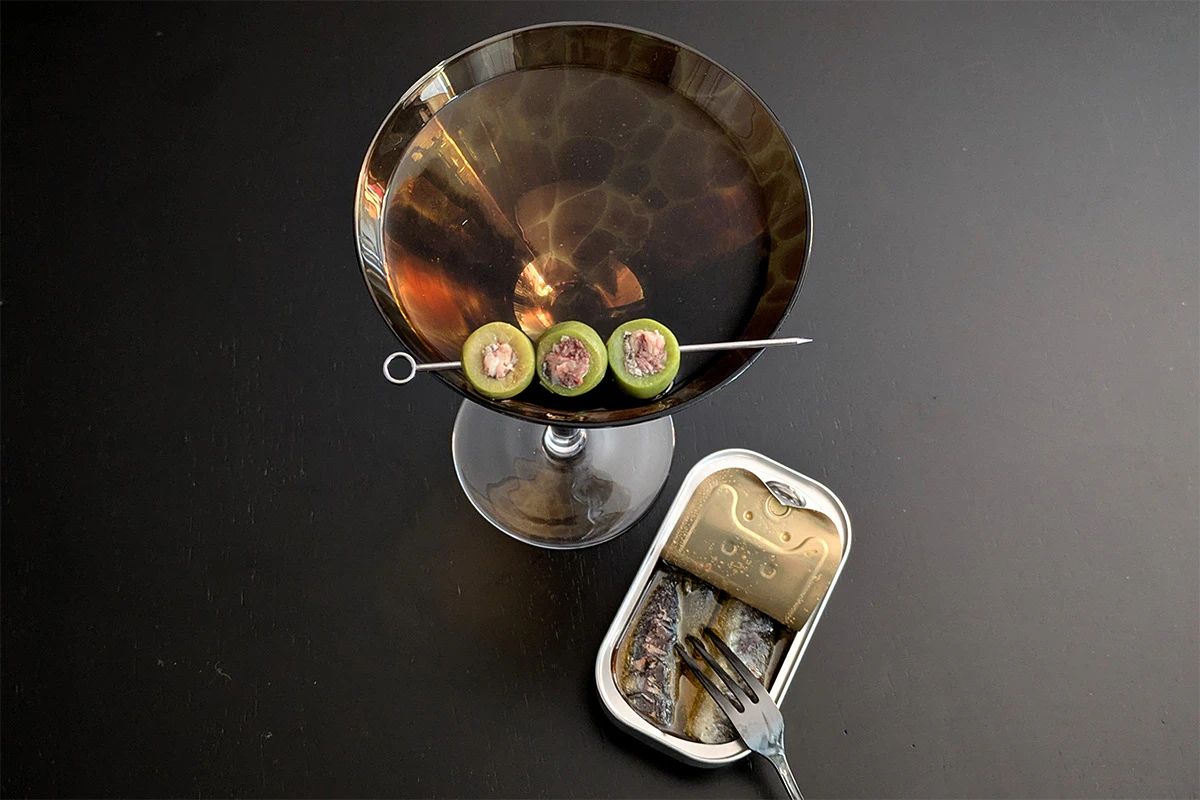
Ella Fish Gerald
At last: a 50/50 martini, combining extra-dry sherry and dry vermouth, to pair with sardines! This tinned fish trend isn’t just about novelty—it’s about unlocking new layers of flavor and making every martini an adventure for the palate.
1 oz vodka
1 oz London dry gin
½ oz dry vermouth
½ oz extra-dry sherry
½ bar spoon sardine oil
Add all ingredients to a mixing glass with cubed ice and stir well. Double strain into a chilled martini glass and garnish with a sardine fillet.
Oyster Mignonette
½ cup white wine vinegar
2 Tbs minced shallots
½ tsp cracked black pepper
½ tsp kosher salt
Whisk all ingredients together and let stand for 1 hour. Whisk again before use. Store in a sealed container in the fridge.
Billie Ocean Holiday
2½ oz vodka
½ oz dry vermouth
½ bar spoon olive brine
1 bar spoon Oyster Mignonette
Add all ingredients to a cocktail shaker with a handful of cubed ice and shake well. Double strain into a chilled martini glass. Garnish with a spear of olives and an anchovy filet.