

The holiday season is the perfect time to gather friends and family for festive celebrations. And what better way to get everyone in the spirit than with a well-curated cocktail bar?
Let’s be real: Sometimes, a little liquid cheer is just what you need to navigate family gatherings. With a thoughtful selection of spirits, modifiers, mixers, and garnishes, you can create a diverse cocktail menu that caters to a wide range of tastes.
Here’s how to build a holiday cocktail bar that will impress your guests without breaking the bank.
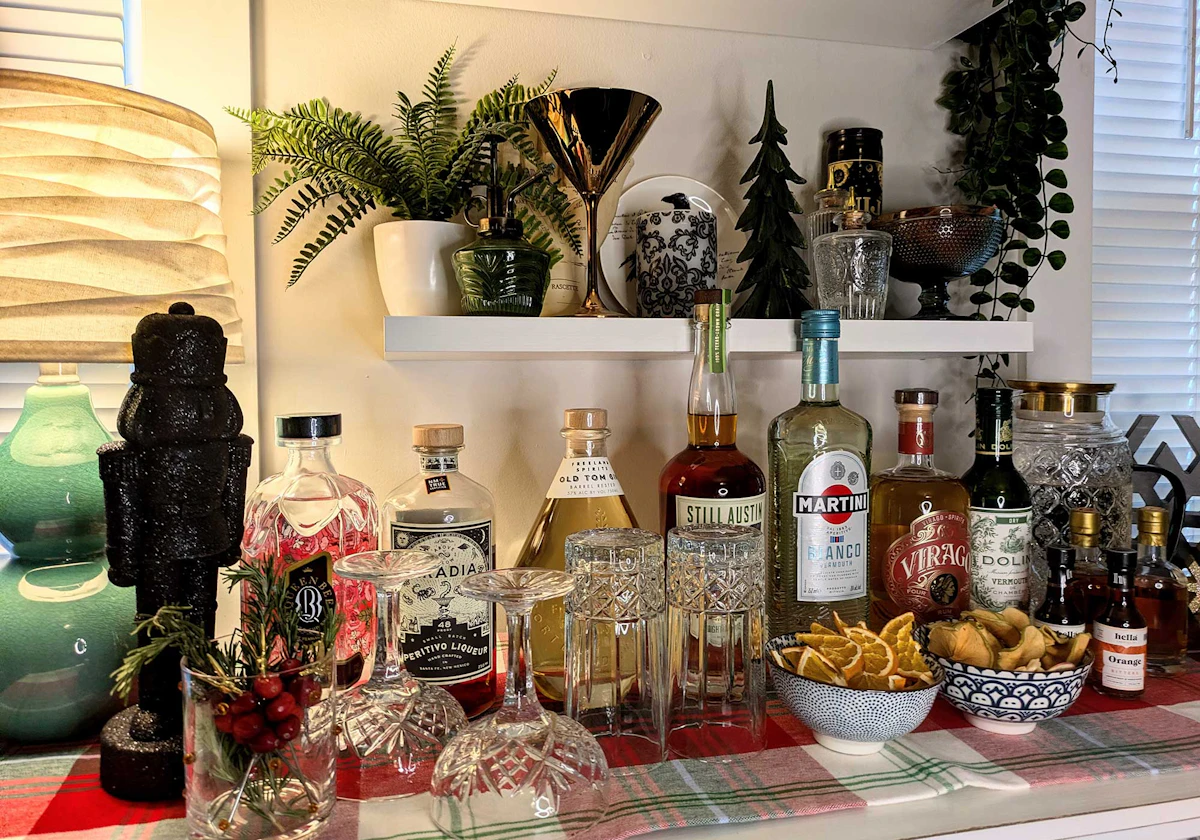
Base Spirits
A successful cocktail bar starts with a solid foundation of base spirits.
I suggest having at least three base spirits: vodka, gin, and whiskey. If you want to offer a little more diversity, add rum or tequila to the mix.
Quality spirits make all the difference in cocktails. You don't have to break the bank, but I do recommend shopping local. Offering local craft products is a great conversation starter, and guests who aren’t from the area get to experience the flavors of the region. Go with whatever your local distilleries do best.
Deciding how many bottles of each spirit and modifier you need depends on your head count and whether you already know their drinking preferences. Because most cocktail recipes are in ounces, it helps to know that there are about 25 ounces in every 750 ml bottle. An old fashioned, for example, usually contains two to three ounces of whiskey, depending on your preferred recipe. Typically, I make my old fashioneds with two or 2.5 ounces.
For a social gathering, I tend to make cocktails with less alcohol to prolong the evening and help curb overconsumption. In this case, one bottle of whiskey is enough for 12 and a half old fashioneds. So, if you have three people drinking old fashioneds and expect them to enjoy two each, you’ll need one bottle of whiskey to meet that demand.
For modifiers, it’s similar math: A negroni, for example, contains equal parts gin, Campari, and sweet vermouth—one ounce each. So ideally, you can serve about 25 negronis from one bottle of Campari.
So, look at your cocktail options to get an idea of what you’ll offer your guests, or what you know they like to drink, and that will guide you on what size bottles to purchase and how many.
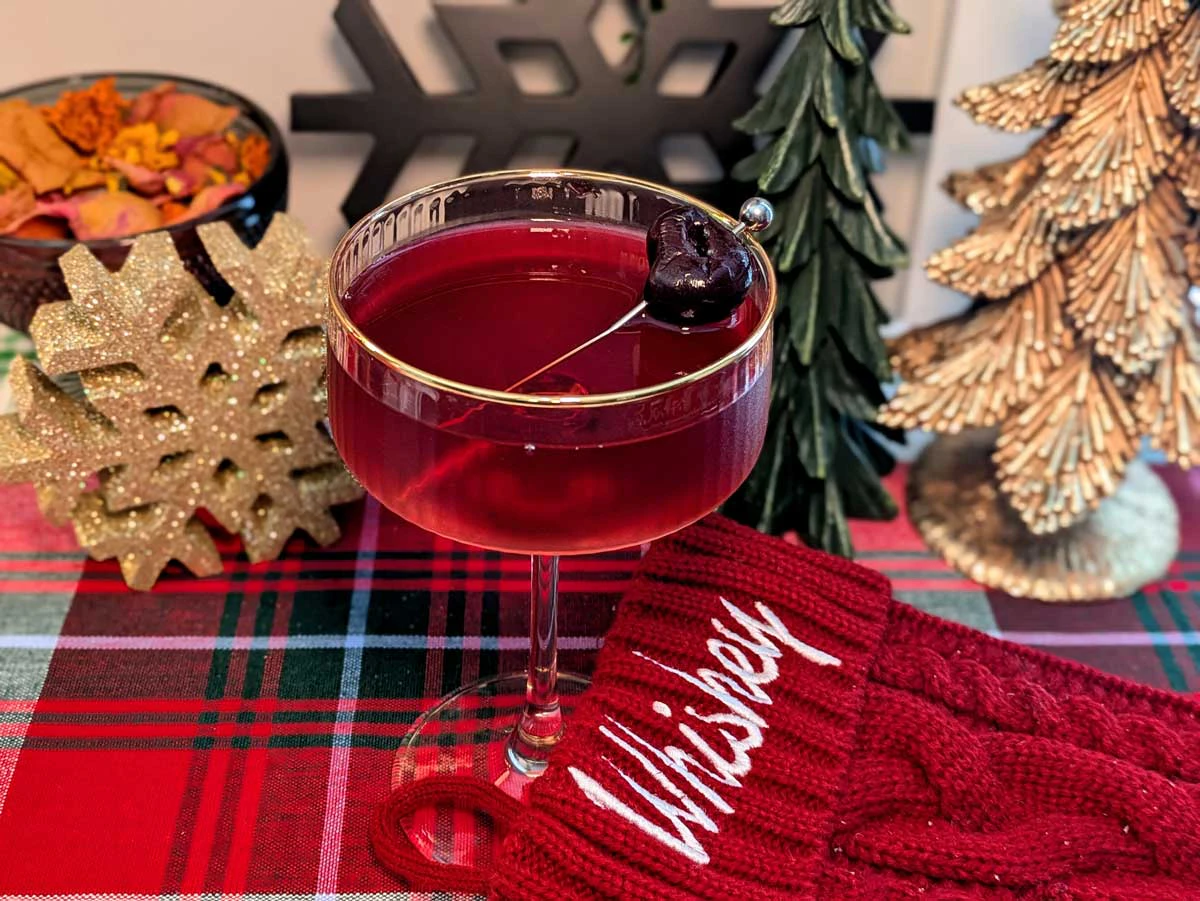
Modifiers
Modifiers are what turn a spirit into a cocktail, so it’s critical to have a good selection of versatile modifiers on hand.
Vermouth is an essential ingredient in many cocktails, including the martini, negroni, Manhattan, and boulevardier. I suggest every home bar be set up with at least two bottles of vermouth: one dry, and one sweet. You can craft your own vermouth in advance if you want to really impress your guests, or you can buy a good-quality vermouth. If not making my own, I’m an ardent brand loyalist because bad vermouth is usually very bad. Stick to mid-shelf vermouth, keep it refrigerated after opening, and note the date you opened the bottle—vermouth usually lasts no more than four to six weeks, depending on how it’s made.
Another item that’s virtually obligatory is amaro. Campari is a popular choice for negronis, boulevardiers, and Americanos. However, as wonderful as Campari is, there are many other high-quality options available at your local liquor retailers, including many brands made by American craft distilleries. If your local distillery doesn’t offer an aperitivo, consider ordering one online from brands such as Denver-based Leopold Brothers, Tattersall in River Falls, Wisconsin, or Washington, D.C.’s Don Ciccio & Figli, just to name a few. Besides a red amaro with orange and citrus flavors, having a dark one such as a fernet or Averna-style on hand is also a great item to elevate your bar. Amaro isn’t just a modifier, either—sipped neat or with soda, it's becoming increasingly popular as a refreshing aperitivo or digestive. An amaro and coffee for dessert or a small glass of amaro neat by a warm fire is a great way to end an evening.
And of course, you’ll need bitters, another ingredient that you can make at home in advance, and in a range of interesting flavors to spark conversation and wow your guests. Otherwise, you can keep two staples at your bar: aromatic and orange. They’re easy to find in grocery stores and local liquor retailers, and there are several craft options available online.
Next, it's essential to have syrups on your bar. If you stock only one syrup, it should be a standard simple syrup—equal parts sugar or honey and warm water, stirred until the sugar grains are fully dissolved. However, it’s easy to make a few different types if you have the time. For example, you can make four cups of simple syrup, divide it into one-cup portions, and infuse them with different ingredients—cinnamon, nutmeg, pear, orange, chocolate, vanilla, rosemary… the possibilities are endless. Also, consider what’s happening in the kitchen—what will you or your partner be preparing? Will there be leftover orange peels, cranberries, or sage, for example? All those ingredients make great cocktail syrups with minimal effort. Instead of water in your simple syrup, you can also mix equal parts sugar (or honey) and juice to make orange, cranberry, or lemon syrups. Interesting syrups can turn a standard old fashioned into an unforgettable drink, and they’re also excellent for mixing delicious nonalcoholic cocktails. I always advise home bartenders to load up on syrups, especially if they can’t have an array of liqueurs and modifiers.
Speaking of liqueurs, every home bar should have at least two liqueurs at all times: orange (such as Triple Sec) and coffee. If you’re planning to make your own syrups, you can also make your own liqueurs while saving a few bucks and impressing your guests.
Juices and sodas also are essential to a well-stocked bar—they’re great for cocktails and quick spirit-and-soda offerings, and they’re also a handy nonalcoholic option. I suggest plenty of club soda, ginger beer, and, of course, tonic. If you have the space—or you live in a cold climate and use your garage as an additional fridge—I recommend keeping your sodas chilled.
Juices are also vital. Fresh juices are best, but if you’re busy and short on time, choose all-natural, real juices—avoid concentrated juice. I always have cranberry, lemon, lime, and orange on hand. That way, I can make just about any cocktail that involves juice. If you choose to have rum in your bar, pineapple juice is a delicious and popular companion. Cranberry is obviously a popular choice during the winter holidays and can be mixed with any base spirit and with bubbly. I typically choose unsweetened cranberry juice, adding a dollop of simple syrup if my guest prefers a sweeter drink.
The Shopping List
Before you create your shopping list, decide on your cocktail menu and which mixed drinks you’ll be able to serve based on that menu.
Decide on one cocktail for each base spirit, and then see how you can cross-utilize your modifiers. Then do the math based on your guest count, using any information you might have about how many guests might drink alcoholic beverages, how many might stick to nonalcoholic drinks, and how many might have some of both.
If you know that you’ll entertain guests who are avid whiskey or tequila fans, for example, that can help guide your decision on whether you’d like to have a smaller range of cocktails and focus on some interesting, unique, top-quality bottles for both neat pours and cocktails. Or, if you know most of your guests are vodka and gin drinkers, they’re most likely going to be more cocktail-focused.
Here’s a solid list of things to stock or make:
- gin, vodka, and whiskey
- dry and sweet vermouth
- Campari
- orange and coffee liqueurs
- aromatic and orange bitters
- simple and honey syrups
- tonic and club soda
- lime, cranberry, and lemon juices
And using those three spirits, here’s how the cocktail menu might take shape:
- vodka: freezer martini, vodka tonic, lemon drop, cosmopolitan
- gin: freezer martini, negroni, bee’s knees, gin and tonic, Tom Collins
- whiskey: Manhattan, boulevardier, old fashioned, highball, whiskey sour
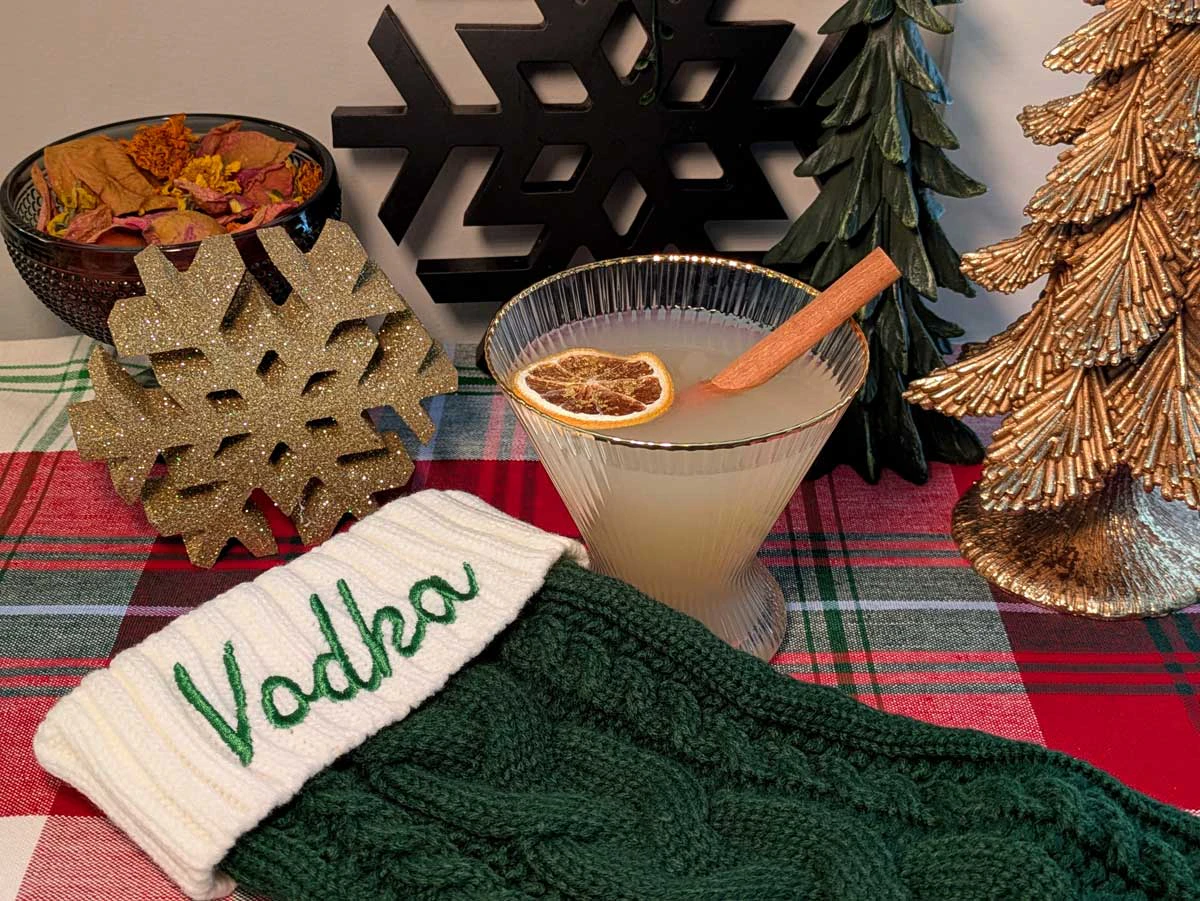
The Recipes
Here are some classic, easy-to-make recipes that are sure to be popular with your guests.
Consider batching some of these recipes to make serving quick and easy, so that you can enjoy your time as well as play host. (Learn more about the ease of batching here.) Most of the recipes included here are easy to batch, too.
Freezer Martini
500 ml vodka or dry gin
4½ oz filtered water
4½ oz dry vermouth
8 dashes orange bitters (optional)
Olives or lemon twists
In a clean, dry, 750 ml glass bottle, combine the vodka, water, vermouth, and bitters, leaving a little space at the top. Seal the bottle and shake it well. Place it in the freezer overnight; you can also freeze your glasses for an icy serve. About 10 minutes before you’re ready to serve, remove the bottle from the freezer. To serve: Shake the bottle well to warm the slush, pour into a martini glass—leaving about an inch at the top—and garnish with a speared olive or lemon twist.
Cosmopolitan
Most recipes call for a citron vodka but, when making cosmos at home, it’s perfectly fine to skip the citron and use standard vodka. This recipe adjusts for that option.
1½ oz vodka
½ oz orange liqueur
¾ oz lime juice
½ oz cranberry juice
1 lime wedge
Add all the ingredients except the lime wedge to a cocktail shaker with ice and shake well. Strain into a cocktail glass and garnish with the lime wedge.
When batching this cocktail, be sure to add filtered water for dilution because you won’t be shaking it—for a batched cosmo using one 750 ml bottle of vodka, add 1 oz filtered water. Be sure to pre-chill the batch before serving.
Lemon Drop
2 oz vodka
½ oz orange liqueur
1 oz lemon juice
1 oz simple syrup
Add all the ingredients to a cocktail shaker with ice and shake well. Strain into a cocktail glass.
For a festive aroma and presentation, add a few cranberries and a rosemary sprig to a cocktail spear. Optionally, for those with a sweet tooth, sugar the rim of the glass. For an extra-festive bump, you can add food-grade glitter to the sugar. This cocktail also is an excellent one for changing up the syrup—try a honey syrup, herbal syrup, or even a cinnamon syrup to put your own spin on this classic.
Bee’s Knees
2 oz gin
¾ oz lemon juice
½ oz honey syrup
Add all the ingredients to a cocktail shaker with ice and shake well. Strain into a chilled cocktail glass. Note that this is another great cocktail for batching.
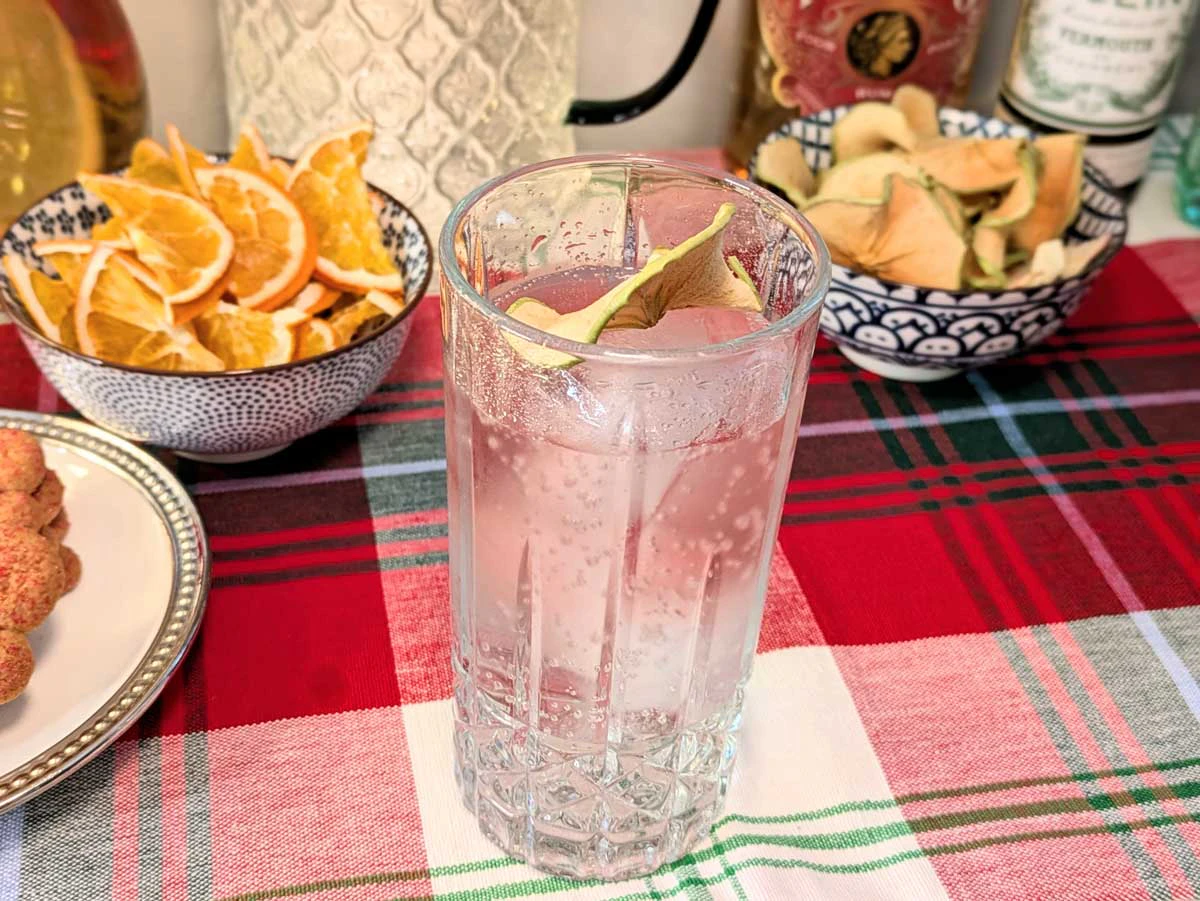
Tom Collins
2 oz dry gin
1 oz lemon juice
½ oz simple syrup
Club soda
Add gin, lemon juice, and simple syrup to a Collins glass and stir. Fill the glass with cubed ice, then top with club soda. Garnish with two cocktail cherries.
The Tom Collins is another one where it’s easy to add your own perspective. Swap out the standard simple syrup for something festive—or try splitting the juice 50/50 lemon and orange. Go nuts and add a splash of cranberry juice.
Manhattans
You have two options when making this cocktail: go with the standard Manhattan, or make the perfect Manhattan, which splits the vermouth 50/50 between sweet and dry. The classic calls for rye whiskey, but feel free to swap in American single-malt or bourbon. You’ll detect a nuanced difference in flavor, which can be lovely when using a quality whiskey.
Classic Manhattan
2 oz whiskey
1 oz sweet vermouth
2 dashes aromatic bitters
Add all the ingredients to a mixing glass with ice and stir well. Strain into a martini glass and garnish with a cocktail cherry.
Pro tip: Try splitting the bitters with one dash of aromatic and one of orange for a little twist on this classic.
Perfect Manhattan
2 oz whiskey
½ oz dry vermouth
½ oz sweet vermouth
2 dashes aromatic bitters
Add all the ingredients to a mixing glass with ice and stir well. Strain into a martini glass and garnish with a cocktail cherry.
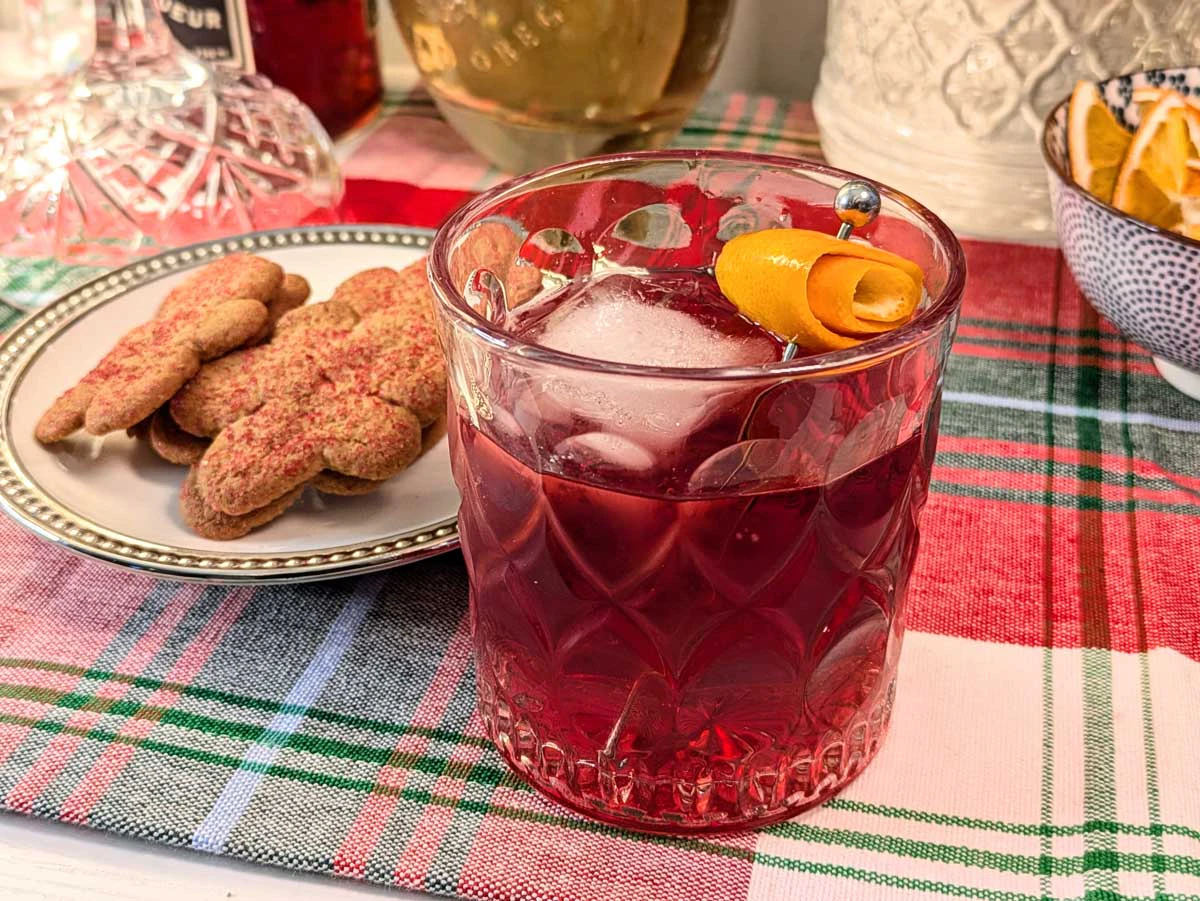
Boulevardier
This is one of my personal favorites. You can serve it up or on a big ice cube. I prefer to enjoy it with as little dilution as possible, so I chill my sweet vermouth before mixing.
As with its Manhattan cousin, many recipes call for rye whiskey, but this cocktail works with all types of whiskey. I love how bourbon adds caramelized sweetness, and American single-malts bring fruit flavors. A smoky whiskey is also enjoyable in this cocktail.
1½ oz whiskey
1 oz Campari or aperitivo
1 oz sweet vermouth
Add all the ingredients to a mixing glass with ice and stir well. Strain into a stemmed cocktail glass and garnish with a flamed orange peel.
Negroni
If you’re comfortable mixing up negronis, it’s time to lean into some riffs, and the holidays are an excellent time to unleash your creativity. Let’s start with the classic build…
1 oz gin
1 oz sweet vermouth
1 oz Campari or aperitivo
Add all the ingredients to a mixing glass with ice and stir well. Strain into a short glass over a big ice cube or cubed ice. Garnish with an expressed orange peel.
Next, let’s add a bit of seasonal spice to the classic…
Cinnamon Negroni
1 oz gin
½ oz sweet vermouth
½ oz Campari or aperitivo
½ oz cinnamon syrup
Add all the ingredients to a mixing glass with ice and stir well. Strain into a short glass over a big ice cube or cubed ice. Garnish with an expressed orange peel and cinnamon stick.
Dessert
If you feel the need to whip up some espresso martinis after a meal, remember that you can also make an Irish coffee variation at the same time. Coffee cocktails are wildly popular these days, so lean into coffee liqueur for after-meal celebrations.
As you gear up to create the ultimate holiday bar, remember that the key to an unforgettable experience lies not just in the spirits and mixers but also in the stories they tell.
Picture this: as your guests sip on a perfectly balanced negroni or relish an elegantly crafted old fashioned, they’ll be regaled with tales of local distilleries and quirky flavor experiments. So, don your most flamboyant apron, embrace the artistry of cocktail creation, and don’t shy away from a little playful banter! After all, the more fun you have behind the bar, the more your guests will feel like they’re part of an exclusive club of cocktail connoisseurs.
Cheers to crafting connections one delightful drink at a time. Just remember: What happens at the bar, stays at the bar—especially when family is gathered—unless the cocktails are too good to keep quiet about.