

The Blue Ridge Mountains of western North Carolina have a dreamy, ethereal quality, with a skyline that shifts seamlessly from evergreen to azure, winding roads that surprise with hidden lakes and streams, and all with the promise of quiet isolation from modern chaos.
Rich in history, culture, and folk mysticism, Appalachia also happens to be one of the most botanically diverse temperate-forest regions in the world, its south-central area a home to an estimated 2,500 plant species. Local folklore whispers of mountain medicine, granny magic, and kitchen witchery dating back centuries to when European settlers, indigenous tribes, and African slaves shared traditions and wisdoms to conjure cures from many hundreds of plants thought to have medicinal value.
Passed down through generations, that healing knowledge is still used today. But at Asheville’s Eda Rhyne Distilling, owners Chris Bower and Rett Murphy have used it as the inspiration for their award-winning, small-batch spirits.
They’ve woven local magic and mysticism into the fabric of their distillery’s brand, from its namesake—an old Haywood County ghost story whose beautiful heroine wreaks posthumous revenge on her brutal killer—to the recipes that combine foraged shrubs in ways that echo traditional healing methods.
“I started learning about edible and medicinal wild plants as a child from my pappy, and I am still learning about folk medicine and plants today,” says Bower, a native Appalachian. “I started learning illicit distillation in the mountains of western North Carolina in the mid-2000s—moonshine and folk-medicine traditions have always gone hand in hand.”
Mountain Spice and Smoke
While Eda Rhyne is clear that its spirits are not medicinal, their ties to holistic therapies root them distinctly in their place, meanwhile showcasing the potential of the region’s wild, uncultivated mountain plants.
While the products vary depending on available ingredients, the core of Eda Rhyne’s offerings is a distinct range of amari. The history of amaro as a by-product of medicines made from local flora by Italian monks struck a chord with Bower and Murphy, who saw the parallels with their own region.
“When I discovered European herbals and amari, I was totally infatuated,” Bower says, “and when I looked into their origins, I discovered they used a lot of the same medicinal plants we use in our Appalachian folk-medicine traditions.”
In amari, the pair saw an opportunity to combine their love of Appalachian culture with the Italian tradition of root- and herb-based digestifs.
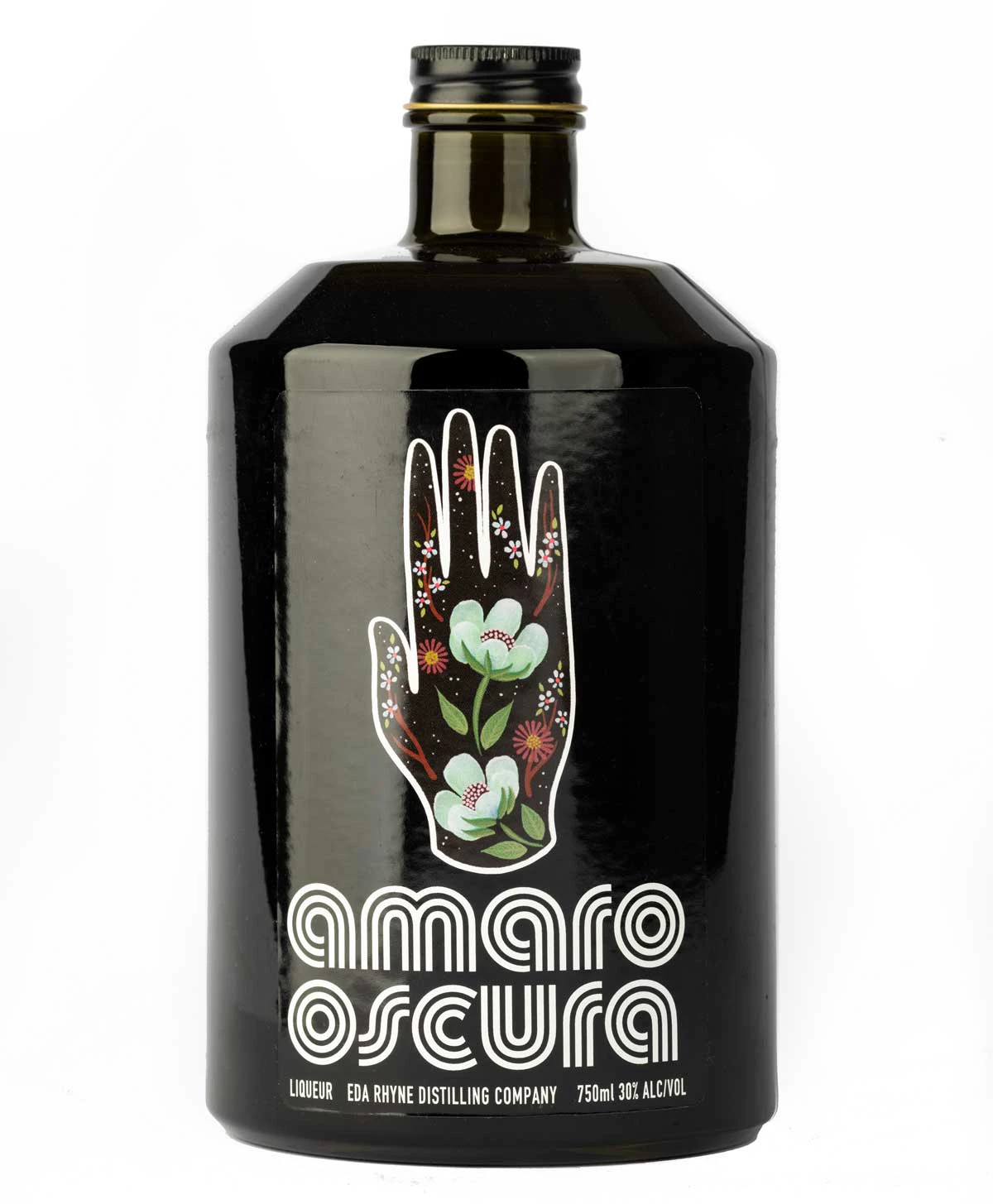
One of Eda Rhyne’s flagship offerings is an amaro in the rabarbaro style—a type typically made from Chinese rhubarb root, which has a subtly smoky flavor. Eda Rhyne produces its Amaro Obscura, however, with hickory-smoked rhubarb, heightening the drink’s signature smoke-and-spice notes. The liqueur also incorporates Appalachian wild cherry bark, an indigenous curative thought to sooth coughs, reduce inflammation, and aid digestive issues. In conjunction with spruce tips and sweet birch, Bower says the bark “imparts a woodsy balance to the exotic rhubarb root bitter.”
Appalachian mountain mint is a fabled herb among local healers, with oral histories telling of its use by tribal shamans to raise the dead. It was adopted by European settlers for its multipurpose healing properties. Eda Rhyne uses the plant in its signature Appalachian Fernet to enhance its delicate, layered character. Meanwhile, the limited-run Bitter Tooth—an aperitivo-style red amaro that incorporates more than 20 botanicals—includes Appalachian spicebush, or wild allspice, its red berries gathered from the forest floor to be dried and ground. Besides its use as a spice, local and indigenous people once used it as a purported treatment for coughs, colds, parasites, and typhoid.
“I really love the spicebush note in the Bitter Tooth,” Bower says. “It adds an interesting snap and depth to this brawny aperitivo.”
Learning Through Experimentation
The cofounders describe the development of their ingredient profiles as a complex process perfected through trial and error—and one that’s at the mercy of the FDA for approval of numerous obscure ingredients not sanctioned for use in food and beverages.
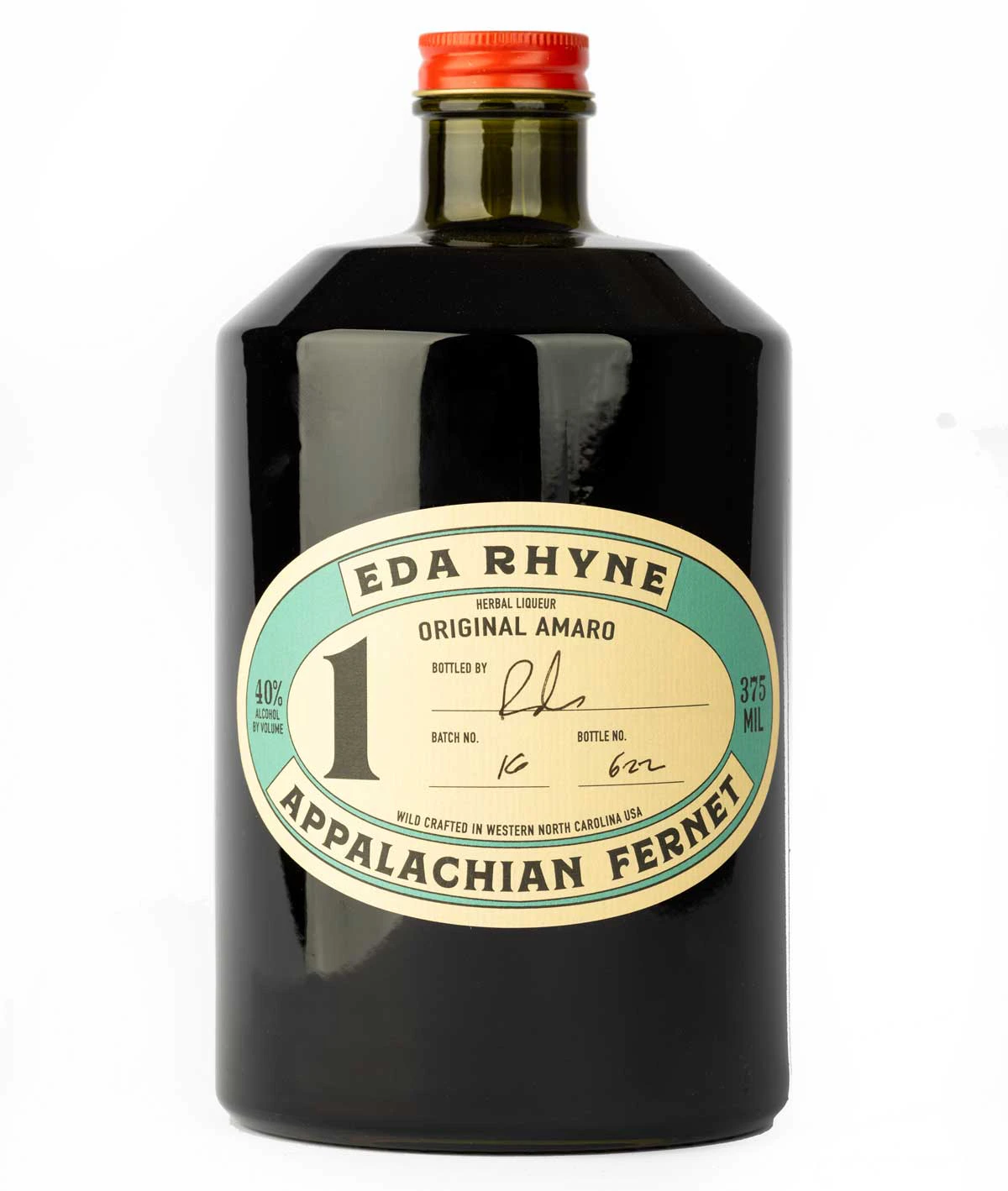
In the original incarnation of their Appalachian Fernet, the FDA disallowed about 25 plants, and that meant reworking the recipe to finally arrive at 40-something permitted botanicals. Yet Bower and Murphy were undeterred.
“Their refusal turned into a super-fun challenge to capture the same delicious complexity of the original with [fewer] ingredients,” Bower says. “It was a fabulous way to substantiate my abilities.”
Experimentation has been at the forefront of Eda Rhyne’s recipe development, as have time and flexibility. When you are using foraged, seasonal ingredients whose properties must be captured in a timely fashion, building a process that works and implementing it quickly is essential. Seasonality is key to their Lindera Spicebush Vodka, for example, and it requires a particular foraging and distillation process.
“It is made from the young spicebush leaves as they first emerge in spring, and we only have about three weeks to collect them,” Bower says. “We have to wild-craft them from morning to 11 a.m. because the hot noon sun somehow muddies their flavor. We take the freshly foraged leaves and vapor distill with them each day.”
Getting that right isn’t easy. Bower says it took the team three years to learn how to finesse that process successfully; with Bitter Tooth, it took four. Each drink includes plants that have undergone a particular combination of maceration, vapor distillation, and infusion to achieve the desired effect—processes that they keep firmly under wraps.
“I don’t want to give our final number [of ingredients] because I’ve always been intrigued by the tradition of secrecy with amari,” Bower says, referring to the drink’s history of protected, proprietary recipes passed verbally from generation to generation.
Bower is more forthcoming about Eda Rhyne’s limited run of Pilz chanterelle mushroom liqueur, featuring a maceration of freshly foraged chanterelles in neutral corn spirit. “The idea was born when I found an exceptionally fruitful bloom of chanterelles,” he says. “After cooking most of them up, I had a handful left over and I threw them into a jar with some high-proof vodka to see what would happen. When I tasted it a week later, I was floored by the results.”
They made the Pilz in small quantities for in-house consumption until one of their foragers came upon a substantial haul, which the team happily snatched up to distill into a beautifully earthy, nutty beverage with the chanterelle’s caramelized-apricot flavors.
Ethos
Foraging that respects the land is central to Eda Rhyne’s practice. Friends and professional foragers help with the gathering, using only private land and eschewing any endangered species.
The distillery also has worked with local farmers on sourcing heirloom grains to use in limited-run whiskies.
Bower says they also aim to minimize the use of resources through the distillation process. “When we first started Eda Rhyne, we always had the intention to be as eco-friendly as possible,” he says. “Rett has a brilliant mind for sustainable design and built the distillery to eliminate as much waste as possible.”
Eda Rhyne also used Climate Hound carbon-accounting software to help them make the facility carbon-neutral. “Climate Hound is guiding us to make better and more profitable decisions while also making tangible impacts in the lives of others,” Bower says.
A climate catastrophe impacted Eda Rhyne directly when Hurricane Helene struck the Southeast in September 2024. Flooding severely damaged the distillery in Asheville’s Biltmore Village, destroying the taproom and washing away gallons of inventory.
Rebuilding has been tough, but local support was helpful to get new batches of whiskey aging, washed-out foraging spots replaced, and their taproom reopened. Despite the enormous loss, Eda Rhyne is still going, leaning into the practices and processes that have won them numerous accolades. Those include: a Made in the South award from Garden & Gun for the Appalachian Fernet; Murphy’s appearance on the Wine Enthusiast Future 40 list; and an invitation to the prestigious Terra Madre Salone del Gusto, a Slow Food (and drink) exhibition in Turin, Italy.
The team’s passion for their products and processes, inspired by Appalachian history and culture, continues to drive them to explore wider potential in their local flavors.
“I usually start the process because there is something I want to taste or I want to capture a feeling or sense of place,” Bower says. “From there, I will start building from the plants I find in that place or give me that feeling. Then I use my relationship with the plants and their flavors to focus the recipe and build complexity. Intuition is crucial.”